Monday, 31 July 2017

GW: USING DOCUMENTARY MODES, TYPES AND STYLISTICS

In my Global Warmning piece I wanted to reflect back on the different modes of documentary and see how I could utilise them in this piece. A very interesting and influential approach to the study of documentary that I have used throughout my own work is Bill Nichols’  “The Documentary Modes of Representation”. In this he identified five different modes (or types) of documentary. He created a way of organising documentaries into catagories similar to film genres. Unlike genres though these modes, Expository, Observational, Participatory, Reflexive, Performative and Poetic, were defined with reference to documentary techniques rather than subject matter like their feature film counterparts.

Taking these modes as a starting point and exploring all the areas that Nichols devised in more detail will help me to define the boundaries of traditional documentary techniques. Whilst not the definitive tool it has helped me to understand styles, techniques and approaches and consider how to manipulate, stretch and possibly subvert them. Much as modern chefs are now creating “deconstructed” dishes such as reducing a cheesecake to its core elements and playfully distorting subverting and disrupting them I am looking to apply this same practice to my practice. All of these areas interest me and I can "borrow and be playful or even possibly subvert codes and conventions from all of them to help me create my Global Warmning piece.

My earlier works had been wanting to experiment predominantly in the poetic and reflexive modes and wanted to use stylistics, techniques, codes and conventions of these. They had the greatest scope for creativity and manipulation of sound and image and will get me closest to my aim of creating exciting works fusing documentary with fiction and avant-garde.

However the Global Warmning piece is a very different beast. The creativity here is in the content and the storytelling less on the creative stylistics. What will be more important is the mimicry and use of the codes and conventions of the modes to create pieces that feel like types of documentary that the audience are familiar with. I am working in the realm of a hybrid of the docu-drama which uses documentary form to tell an invented but plausible story and drama-documentary which is based on real events but uses conventional fictional forms (scripts, actors, narrative and structure) to tell the story. I need the audience to feel that the documentaries are right so an excellent understanding of the form is essential. I decided to look again at the documentary modes and to see how I could use them in the construct of my Global Warmning piece.

POETIC DOCUMENTARY MODE

From all of the documentary modes poetic documentaries were the area of most interest to me and my work. To use Nichols’ 2001 own description these emphasise “ visual associations, tonal and rhythmic qualities, descriptive passages”. He also added the poetic mode “moves away from the ‘objective’ reality of a given situation or people, to grasp at an “inner truth” that can only be grasped by poetical manipulation”. In other words, the audience are shown an abstract, subjective, representation of reality or “inner truth” achieved through techniques such as accentuated visuals and a narrative organised to fit the mood of the documentarian rather than the linear, logical organisation of the majority of documentary films.

In this they share similarities with the more cinematic use of film language that some Performative documentaries use. As mentioned on my performative documentaries post this manipulation of editing, sound, cinematography and mise-en-scene as well as structure to create an emotive response to the content matter. This highly cinematic use of film language will allow me greater creativity and for my documentary work to draw on fiction and avant garde film techniques to create mood, tone and more emotional meaning to the audience.


A good example is  Leni Riefenstahl’s Olympia (1938) on the Aryan athletes representing Nazi Germany at the 1936 Berlin Olympic Games. Riefenstahl glorifies the athletic ability and aura of these athletes through exagerated low camera angles and slow motion editing. In addition to this, Riefenstahl manipulated the sound editing of the documentary so that the background music matched with the movements of the athletes. These obvious distortions of reality in fact had the intention to use the ‘documentary’ as a source of Nazi propaganda to fuel patriotism within Germany and therefore demonstrate how documentaries of the poetic mode present a biased, subjective reality.

I feel that the poetic mode is one to stray away from in the Global Warmning project though. I do not want to work to feel contrived but rather be stereotypical versions of modes that the audience are familiar with. I am after nuts and bolts nailed on documentary styles codes and conventions. The audience have to feel that the content that i am creating is real and that they are not being manipulated.


PERFORMATIVE DOCUMENTARY MODE

Performative documentaries are defined in three main areas. The first two of these can sometimes centre the film around an actual performance or can even be a performance by a character in a role. The last relates to a performance by the documentary-maker being the central focus of the film and drawing the audiences attention to the construction and the filmmaking process with all the trials and tribulations this involves. Questions are often raised by this type of documentary with the director being the “star” and auteur and a lot of the work of Nick Broomfield is a good example of this.


The area of performative documentary that I was interested in previously was the one that experiments with form film language itself. This is the manipulation of editing, sound, cinematography and mise-en-scene as well as structure to create a performance rather than just subservient to the subject matter. They are generally highly cinematic and use all of the areas of film at the filmmakers disposal using style to create emotive meaning to the audience. A good example of a performative documentary is Night Mail by Harry Watt and Basil Wright using music, recreated sets, poetry and cinematic and atmospheric visuals to create a piece of good propaganda about society pulling together for a greater good and national pride.

The issues with this mode obviously overlap with the Poetic mode reservations.  I do not want to work to feel contrived but rather be stereotypical versions of modes that the audience are familiar with. The audience have to feel that the content that I am creating is real and that they are not being manipulated.

However the the performative aspect I am interested in exploring is the first two types. The first of these can being the film centred around an actual performance and the other being the performance by a character in a role. Whilst I have no desire to be in front of camera and have no real acting chops I am convinced I could hopefully play myself! I could be in the documentary as the film-maker interviewer for an added sense of reality. It is my piece I am the producer director so feel that this would be believable too which is the key. The second is self explanatory as I will need "actors" to play the roles. This will be tricky as I do not want the roles to look acted. Casting people who are real and not actors will be one way around this but for some of the larger parts, for instance that of Ben Wright this will be very hard as there is a lot to remember. I will have to mix this up but casting for type (typage) and playing on stereotypes will help in here too. Lastly possibly extending in web doco content direct address in a Vlog or video diary style of the main protagonist could be an area worth exploring too.


EXPOSITORY DOCUMENTARY MODE

Expository documentaries are the most common and familiar to audiences and are primarily made for TV. The techniques often employed include a voiceover narration, commenting on the images on screen and explaining them to a direct address to the audience. They can also use a lot of formal talking head interviews alongside general views of what is being communicated. Generally they develop and construct an argument and are not objective. Typical examples would be biopics and nature documentaries.


As Expository documentaries are such atypical documentaries that audiences are familiar with and due to this some of the techniques employed by them could easily be subverted to create new meanings. The use of talking head will work really well as that simply screams documentary at the audience and voice over may be a useful tool too. GV's of the action as well as archive footage could be used. One of the issue with documentaries is that their standard form can be long so mini web docos could be used. Also TV News features and packages are really just very short expositional documentaries and great for getting the points across quickly and I feel that this could be utilised in the piece. perhaps a news piece to start off with to give the detail and really simplified exposition of the story. If this could also be branded up ITV or BBC it would build the trust both I the fact that it is news and that it comes from a reputable source that the public by and large trust.


OBSERVATIONAL DOCUMENTARY MODE

Observational documentaries are also sometimes referred to as “fly on the wall” or “cinema veritie” and they attempt to represent the world as it is and capture a slice of life and with minimal awareness of the filmmaker. It does this through techniques such as long takes, hand held camera and no use of voice over and music. A film such as Etre Et Avoir and live Big brother is a good examples of this. Observational documentaries are often thought of being the closest you can get to truthful representation.
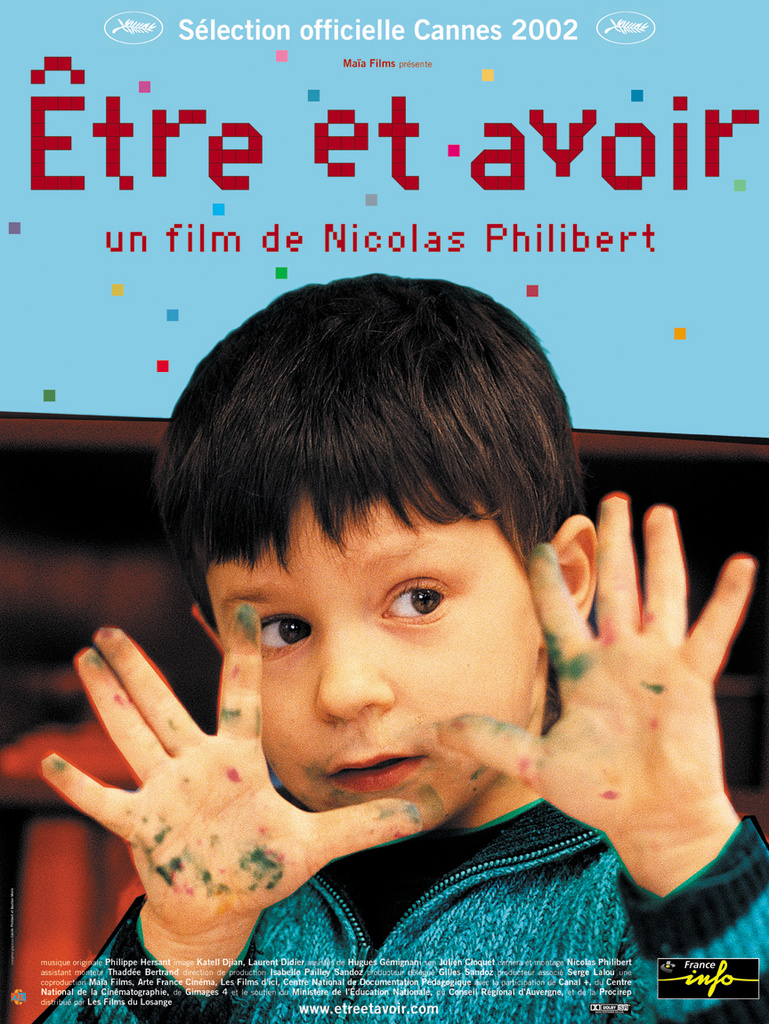


Using observational documentary stylistics, codes and conventions could be useful in creating a "version" of the truth as audiences tend to trust this mode and its camera techniques are often mimic'ed in feature films to create a reality to the subject matter. I was considering some slow cinema for a while as an element to the piece and this would have worked well on that looking at though the camera is simply following our lead character around. ben River's Two Years at Sea is an excellent example of this. I may be able to use it in this piece though especially the interview section, whilst not being fly on the wall as it will be scripted and acted a capturing of that fly on the wall sense would be good. A hand-held roving camera at the interview, the setting up of the interview and raw nature of reality being filmed could all be embraced in the piece.


PARTICPATORY DOCUMENTARY MODE

Participatory (interactive) documentaries are directly opposed to the observational style as the filmmaker is usually the central character of the film. They make it explicit that the film is their point of view and highly subjective and common techniques include voiceovers (with pronounced use of “I”) hand-held camera and informal interviews. These films saw something of a renaissance of cinema documentaries finding an audience in the early 2000’s of finding a through the work of Directors such as Michael Moore and Morgan Spurlock.


I will borrow from the subjectivity that this mode allows to create my own message but I will not be at the centre of the piece. The character of Ben Wright is a composite of the best views, research and thinking that exist on Global Warmning all filtered through me and then portrayed though Wright on-screen. Behind the scenes glimpse at the construction of the documentary and therefore adds to the realism. As mentioned earlier by having web doco content and the character of ben Wright in direct address in a Vlog or video diary style of the main protagonist could be an area worth exploring too and would be a type of partcipatory mode.


REFLEXIVE DOCUMENTARY MODE

Reflexive documentaries have some similar codes and conventions to the participatory in that they sometimes feature the documentarian or interviewer either on screen or off. However they also show the struggle and nuts and bolts of the film-making process. They are have a post-modern feel to them examining the nature of the construction process, the creation of the narrative and the truth. The audience and their journey is paramount and the questioning of our assumptions and expectations of the subject of the film. A majority of the work of Nick Broomfield follows this mode with the often problematic journey to the creation of the documentary behind the scenes often the narrative spine and the subject the content of the films.


The philosophy behind the making of Performative documentaries and the creation of narrative and truth are areas within it are that really interest me. It is pretty much what I am doing for the interview piece with Ben Wright is exactly this. I want to add the drama of trying to get the interview and the struggles and cloak and dagger setting up of it. The drama will be a selling point to hook the audience into the narrative and conflicts to keep them interested and at the same time inform and educate them about global warming. So this will be a mode I can use in this area especially to do that. the struggle to get the interview with Wright and then possibly being blindfolded and taken to a secret location will add to the performative nature.

Returning to the idea of documentary modes being similar to film genres caution must be made and I must make sure there must be a fluidity of approach to strict definitions as illustrated by the cross-overs in the documentary modes mentioned above and I feel confident in using elements from all of these to create my own language of film. To borrow from some genre thinking from Steve Neale, genres are instances of “repetition but difference”. David Buckingham states “genre is not… Simply “given” by the culture: Rather it is a constant process of negotiation and change”.  So I am looking to use these modes and their stylistics codes and conventions paradigms to fool the audience but my manipulation of them can be fluid and they can play off each other.

Friday, 28 July 2017

GW: ACTOR MEETING AND RUN THROUGH

I met up with my actor for the part of modern day Ben Wright an old friend and colleague Brian Rolfe who was the head of performing arts at Suffolk New College.  Whilst thinking of the piece I always had Brian in mind as not only is the right age but has the right demeanor and look for the character that I am after. I had approached him and given him a skinny on the idea and his role a few weeks earlier and the meeting was to flesh out the details and clarify the project for him.


Before the meeting I did some prep so as to make sure that I had a good level of professionalism as Brian was giving up his time for free. I have not done all that much work with actors so the process was going to be a steep learning curve. So I considered and made notes on all of the following areas.
  • A completed synopsis of the whole piece and specifically this element of it.
  • A copy of the timeline of events so Brian could contextualise the piece.
  • Polished the treatment for the whole idea and this piece and took a copy.
  • Overview of the character of Ben Wright. Biography, character, temperament, motivations, background and backstory.
  • Potential shoot dates.
  • Potential locations, costumes etc.

I had a very productive meeting and the really positive thing was that Brian was able to get under the skin of the character almost instantly and understand his motivations, personality and character describing them to me exactly as I intended. Brian was happy to use the location of his outhouse he uses to work in at the bottom of the garden which with some set dressing will be exactly what I had in mind. We also discussed wardrobe and shoot dates were put in as was a date for a copy of the script (as of yet a work in progress).

 Things to consider moving forward.

  • Check location will be OK for light, sound and space upon my return. Consider other locations.
  • Pursue an idea for a second shoot. A Youtube manifesto from a disguised Ben.
  • Reading around about working with actors to extend my knowledge base.
  • More on getting naturalistic performances as this is of the utmost importance to this film.
  • Get script completed and with Brian by Monday 13th August.
  • Shoot dates put in for Weds 15th & Thurs 16th August.
  • Start work on pre-production for the shoots. Storyboards, call sheet, etc.
  • Source kit and crew for the shoot dates.
  • Develp Mise-En_Scene. Prop[s costume etc needed for set dressing.

Thursday, 27 July 2017

ARTHUR JAFA: A SERIES OF UTTERLY IMPROBABLE, YET EXTRAORDINARY RENDITIONS

On 26th July I visited the Serpentine Sackler gallery which is fast becoming one of my favourite venues to see the show by acclaimed US filmmaker, cinematographer and artist Arthur Jafa. Across three decades, Jafa's practice is dynamic and multidisciplinary and covers a wide ranging ranging from films and installations to lecture-performances and happenings. He is issue led and his ideology and therefore his work challenge and question prevailing cultural assumptions about identity and race. His work is driven by a recurrent question: how might one identify and develop a specifically Black visual aesthetics equal to the ‘power, beauty and alienation’ of Black music in US culture?


Jafa first trained as an architect, but made his cinematic debut as Director of Photography for Julie Dash’s 1991 film Daughters of the Dust, for which he won best cinematography at the Sundance Film Festival. He has also collaborated with directors ranging from Spike Lee (Crooklyn, 1994) to John Akomfrah (Seven Songs for Malcolm X, 1993) and artists including Kara Walker and Fred Moten. He has also been recognised for his work on the Solange Knowles videos, Don’t Touch My Hair and Cranes in the Sky (2016). Explaining his favourite medium, Jafa has said: ‘Film is one of the few things, particularly in the theatrical context, that takes up as much space as architecture but like music is fundamentally immaterial.’


The exhibition is titled A Series of Utterly Improbable, Yet Extraordinary Renditions, and as with a lot of the work exhibited at the Sackler that I have seen is site-specific installation. Jafa has transformed the space with a collection of work that encompass film, photography and found footage that all relate to his central preoccupations. The Sackler on their web site describe the show "The title of the exhibition relates to the sense of absence that Jafa observes as haunting Black life. The word ‘rendition’ refers to the artist’s interpretation of the aesthetics associated with Black being, which are historically-inscribed in images, objects and artefacts. By re-performing these narratives in the present, Jafa imagines and constructs new possibilities for making them visible. Jafa creates work that approximates the radical alienation of Black life in the West while seeking to make visible or emancipate the power embedded in modes of African expression. With reference points ranging from Fang sculpture to Mississippi juke joints, Duchamp’s urinal to jazz, he is a filmmaker with a unique understanding of how to cut and juxtapose a sequence to draw out maximum visceral effect.

The exhibition worked well and also allowed for some interesting edits of your own to the show. To accompany you on your tour you were given headphones that were able to select the sound for the installation you were looking at and change this as you moved around. This leant itself to some interesting combinations of sound and image by putting it on the wrong setting. The idea was a good way of addressing the idea of noise pollution of AV works in a gallery.

A couple of Jafa's works really inspired me. One called Mix 2 Constantly Evolving was a collection of "found footage" that it was almost as if Jafa had curated to make one piece in the show. Exhibited on one screen it included an online soap opera featuring black characters and sterotypes of black relationships played out to the full. Another "Wildcat" by Kahlil Josepha moodily shot piece of Americana centres around the dust belt and cowboys but featuring black characters. This piece made use of all of the film tricks of slo-mo, high contrast and really played on the colours of black and white through mise-en-scene and especially costume. These were complemented by a very subjective mini documentary from the 1960's called Savages. It was about the Venice Oakwood projects and the white VO with images of a nice park states black people being uninspired, unintelligent and leading hard lives and that the "The Negro does it to himself". This was balanced by one black inhabitant stating about opportunities to get out of his situation "Not that don't wanna do, its that cannot do!". The contradictions between portrayal of the black and whites is frightening. There is then a short clip with a black man very visibly off his face chemically at an outdoor club looking and dancing manically. The last piece in this collection was 3 degrees to the proximity of disaster which was public footage of the Detroit marathon bombings. the sense of energy and horror is palpable in this.

I loved the way that Mix 2 Constantly Evolving used lots of found footage to build an idea as I mentioned in a curatorly way. This is definitely something I myself have been playing with for the Global Warmning installation BUT I am aiming to create all of the "found footage". Lessons learnt here are the variety of formats that make it more interesting. Art house B/W, online, archive and amateur public shot footage all combining to create a meaning.

Another one was very much in the vein of Craig Baldwin and the Media Jammer ideology and was made up by an AV assault on the audience. It was a rapid fire series of media, cultural (generally pop) and images and video clips edited together. It is similar to some ideas I was developing for an earlier Global Warmning piece. I loved the aggression and again the black rights and representational themes rang out in the piece but even though the work was unsubtle the message was certainly not. The juxtaposition of images alongside each other, Eisenstein's Soviet Montage style created collisions and new meaning.


An interesting part of the exhibition were all of the books with a wide range of imagery that Jafa uses to inspire his work. These are a set of source books of images he has been assembling since the 1980s and this ongoing archive has proved an enduring resource for his work. There were visuals, ideas, articles, headlines and these are an excellent idea and something I may have to adopt as a visual and conceptual inspirational library.

The exhibition also includes the work of three additional voices: the photographer Ming Smith, @nemiepeba - the Instagram feed of artist Frida Orupabo - and content from the YouTube channel of Missylanyus. Together, these three ‘platforms’ or ‘guests’ played against AND alongside Jafa’s own work and presentations throughout the Gallery.

What I will take from the exhibition and use to move my work forward.
  • It is possible to address social/environmental issues in this case race but it does not have to be force fed. Jafa lines up the content and then lets you fill in the blanks. The collision of content and pieces being the equivalent to Eisenstein's collision of images in editing.
  • I really liked the curating of the various clips that all combined to create a meaning. By placing them alongside one another as mentioned above they can come at an issue from different directions but complementing and enhance each other the end result being greater than the sum of its parts. The variety of these was key also.
  • Start my own notebooks and collecting visual and conceptual ideas.

Wednesday, 26 July 2017

GIACOMETTI FILM SCREENING

Having recently joined the Tate one of the bonus's was that you get to go to members screenings that they put on. I managed to get tickets to a screening of the film about Giacometti entitles The Last Portrait directed by Stanley Tucci. I had previously been to see the exhibition as I love his work and the variety of it. The film was excellent and so was the Q&A afterwards with Tucci himself and Frances Morris who curated the Giacometti show that is currently on in the Tate Modern


Now I was not expecting to find too much inspiration as our practice is not very similar at all however the event proved to be a real revelation. The film deals with as well as the a few months in the latter years of his life the idea of the artist continually striving for perfection. It captured this perfectly and centred around Giacometti doing a portrait of an American friend of his. What was supposed to be an afternoons sitting for his friend dragged on for weeks as Giacometti could not achieve it. He got 90% of the way into the painting and then due to his insecurity, unhappiness with it and  a crisis of confidence at it not being "right"painted over it and was pretty much back to square one.

This was a revelation because it is something that I strive to do often crippled by the inability to achieve exactly what I want in my practice so not doing it at all. My issue has always been I do not practice my practice enough. Meaning I do not create enough work as the work i want to do has to be right. This creates dithering, excuses and due to fear of failure not much work at all. I can make excuses that my practice is harder than some as I need lots of crew and actors and collaborators to make it happen but this is just that excuses NOT reasons. I simply am not going to learn as fast unless I practice my practice more even if this means i have to endure the pain of the creative process!!!!


http://www.tate.org.uk/whats-on/tate-modern/exhibition/giacometti

Tuesday, 25 July 2017

GW: TV NEWS VERSION TWO

Following on from the feedback I received from the Big Crit with my peers and my own feelings I decided that I needed to amend the Fake TV News piece. The main issue was that of the news reporter and his attire leading to a spoofy feel to the piece. This was not my intention as I want the audience to buy into the TV news piece and installation as a whole.

Re-shoots
So I went back to Aldeburgh with the actor and a small crew and re-shot the news reporter element. I made sure he was in straighter attire and in a less lampoony style and delivery as well as dialling it down a little. I was annoyed that the sun was out and the day was ferociously windy but it went well. However back in the edit it looks good and less contrived and moody visually. The sound is OK especially as the wind the day we shot was ferocious but this time I kept the microphone out of shot and this worked.

I decided not to re-shoot the IV with the climatologist. there were some thoughts that he was a bit over the top and actorly and I can see the point. However from working on TV crews some people are more media savvy and experts used a lot can tend to over-perform for the cameras so I felt that this was not a huge issue.

TV NEWS FINAL from Jon Saward on Vimeo.


Edit Changes

  • I replaced the footage of the reporter.
  • I changed the voice over of the reporter and re-recorded it to make sure that the person purporting to be Ben Wright was a he. I was going to add some manifesto footage and it would be visible that it was a man and made it reflect that he was now not anonymous
  • I lost a line from the end of the womans IV which kept it cleaner and shorter.
  • I added in less of the photos of Ben Wright. I re-touched some of the ones I used to make it less uncanny valley.
  • I replaced some of the Ben Wright photos with archive film footage of demonstrations. This gave a lot more authenticity to the piece and made the movement seem much more tangible and larger in scale.
  • Replaced the newspaper headline with one that my props maker had made and this cerated a link to the artefacts that would be displayed in the installation..
  • Replaced one of the book cover with one that my props maker had made, again this would be used in the installation.
  • Shortened the title card at the beginning to 10 seconds and added Ben Wrights name to it. This gave the audience 10 seconds to get the clues from this and knock 30 seconds off of the piece.

The main issues raised that I felt related directly to the TV news piece I had to address were as follows and underneath is how I feel I have now addressed these. I am much happier with this piece. It is possibly the best news package ever in terms of all of the archive footage and photos but I feel it adheres to the codes and conventions of the news and feels real.

It needs to take us in more at the beginning. It has a comedic layer and seems a little "spoofy". Spinal Tap flavour. Is this intentional?
The re-shoot plays straighter in terms of costume and delivery. I feel this takes the audience in more.

The professor looks scripted. What is the in-between? Does it matter that it may be seen by viewers as a spoof?
As mentioned above I did not mind this and professional rent a gobs/media whores that are used a lot on TV can over-perform.

In the club or in the know? Should audiences get the "in" joke? How much do you allow the viewer to be in the know?
I feel that now it plays straighter this is less of an issue. It does feel close to the 99% real that I am looking for rather than the 90% of version 1. I feel that the clues are there but harder to find so a reward for those that do.

The photos need more work to seem real. A little too uncanny valley. Less pictures as main man looks too similar in them all.
These have been reduced in number and the ones left re-touched to make better. I have included less too and added the aforementioned archive film footage.

Link more the fictional characters with real historical ones? For instance highly influential Silent Spring book by Rachel Carson.
This will happen in other pieces.

Is the work historically and factually correct? Is this important? Fact checking.
I got feedback from my friend at Greenpeace and all good.

Possibly needs more on the "what if" factor and where we are now.
I felt that this is strong enough in a 4 minute news package BUT I must make sure i address it in the other content that complements this piece too.

Humour can be a good vehicle for triggering emotion and creating memories of what is happening.
The humour is there if you get the fact that the news piece is not real so it is still there just more disguised and less obvious.

How will the piece work in a gallery? Is it stand alone? Consider presentation in the gallery.
I have been doing this

What is the intention of the piece? Stronger call to action?
I still feel this would be clear once all of the elements are curated in the installation in a room or single space. It is hard to tell from the one piece.


Monday, 24 July 2017

GW: SCRIPTWRITING THE DOCO INTERVIEW EARLY DRAFTS

This was a long drawn out process. I had planned the narrative structure, characters, key events and character arc for the whole piece, the TV news piece had been written and created and now the doco script needed writing.

I planned it out methodically drawing inspiration from Frost Nixon by Ron Howard 2008 where the two men go head to head one trying to get the other to confess. Similar was the aim for my piece Ben thought he was simply getting a platform to get his cause across as that was all that was on the table. BUT I wanted to get the dirt, scandal and inside information on Joes murder, Bens 40 year disappearance and the conspiracy theories surrounding these. The interview would be like a game of chess as I reveal my true colours and Ben tries to keep moving back to the issue to keep him sweet. before chancing my arm again. I was looking to make it about 10 minutes so about 10 pages in total.

I decided that it would play like a mini narrative in itself and following Syd Field plan as follows.
  • Set-Up: Crew being granted a short IV and being taken to a secret location blindfolded.
  • Plot point one: I reveal my true colours to the audeince somehow that I am going to try and get him to talk about the conspiracy theories.
  • Conflicts: Me trying to get him to talk about the scandal and conspiracy theories and him rebuffing me with ever increasing frustration
  • Plot point two: I push Ben over the edge he erupts and we have a very heated discussion.
  • Resolution: Ben storms out of the interview very early and the disappears again?
I had carried out lots of research into the global warming topic from lots of different academics, scientists, sociologists and commentators and through these I had compiled nots on topic Ben would cover in the interview. I digested all of this information and became the gatekeeper of it I would be the conduit and Ben would be the composite character from all of this thinking and my subjective opinion.

Having worked on documentaries personally and in industry I was aware of the structure of them soft easy questions at the start to settle the interviewee in and then getting every more deep and personal. This suited the way I wanted the interview to play out perfectly.

I was playing me so my dialogue should be easy although I had to remember that it was in the context of an interview.I was pretty sure I also had Bens voice controlled, calm thoughtful, passionate and animated as well as being no messing and taking no prisoners. He would tolerate me as long as I was promoting his cause and would see through any underhand tactics and ambushes quickly. We were also subservient to him and on his home turf dependent on him to get home so in his mind he had the upper hand.

Draft One
This was a bit of a dog and I just sketched in the key areas. the interview flowed OK but I found the opening scene tricky and over theatrical of the crew being blindfolded somehow and taken to the location. Rather than getting bogged down in it I moved straight onto the interview section. I realised that the research I had was good but it was honing in on the facts figures and statistics and making them sing in the script and not just be a list. I got out something as a starting point but barely that. It did show the weaknesses though and that was too much flat information and preachy at that.

Draft Two
This was much longer and although I was worried about too much information on global warming I wanted to get it all out there and then decide what to leave and keep. This version ran to 15 pages.  I also added in much more scene direction to build atmosphere and to set the scene. It was still a little flat and a lot of Bens answers too wordy BUT he drama and conflict was starting to creep out of the pages. It was getting a little buried in a landslide of data and facts BUT was getting there.

Draft Three
Still wrestling with the global warming answers about the cause. They need to go in as the fiction is just a Trojan horse for debating the issue. Possibly against my better judgement I threw everything I had and wanted to say on the issue at the script. This was to see what I had on the page and what I felt Ben would say and also to try and create a narrative flow to the topics as would occur in an interview. It was far too much but did get it all out of my system and once on the page it was easier to see what could be condensed and what needed to go. I suffered from too much good research and not being able to let go of it and cute little answers I had for Ben to say to communicate the information and ways to describe the issue.
Even though I was overawed by the material in the background Bens voice was sharpening in my head and how he could cut through the colossal amount of information and cut to the chase. Asking him to explain things in layman's terms to the audience was one as and the other was me being cuter with the dialogue. Another plus was that the confrontations were starting to sing a little more on the page too.

I needed some time away from the script to think and regather so I tucked it away and left it to marinate in my head and to ruminate on. I would come back to it with a clearer head and a fresh perspective. BUT all of the material was in there it just needed a good pruning.

BEACHED WHALE

I saw this today in the news and loved it as it is only  few steps removed from what I am trying to do and on a much more physical sense too! It seems hoaxes can be art even when they are huge whale sculptures! Great way to highlight the environmental issues too.


PARIS—A sperm whale appears to have beached on an embankment in the shadow of Notre Dame Cathedral in Paris. Or maybe not. A Belgian artists’ collective installed a very real-looking, life-size whale sculpture Friday alongside the Seine River, eliciting surprise and concern from tourists and Parisians alike. Bart Van Peel, a member of the collective, said the installation is about raising environmental awareness and awakening “the child in everyone who still is puzzled about what is real and what is not.”

https://www.thestar.com/news/world/2017/07/21/beached-whale-appears-beneath-notre-dame-in-paris-for-art-and-awareness.html

Sunday, 23 July 2017

GW: CONSIDERING THE INSTALLATION SPACE

I have begun to consider the installation space and the following ideas all need to be considered in the space. I do not know exactly what the space will be but from initial drawings from Sara the curator of the show it is likely to be a rectangular space, be able to be made pretty light tight so projections will work and approximately 3 meters by 4-5 meters rectangle. Obviously this may change but it is something to work to for now.

  • What I want the public experience to be. I want the audience to question the nature of installations, the media of film and TV, as well as the museum/gallery feel of the artefacts. It is really a film with added extras but I want all of these elements to complement and be intrinsic to one another to build a whole. I also want them to get involved the idea is that by offering a range of elements there will be something for everyone but also a puzzle. and for them to question what are the elements? How do they fit together? What is the story they tell? What is the ideology? The aim is to make them consider the topic of global warming in a different way and perhaps to be left with some of the ideas or for it to generate discussion and hopefully response long after they leave.
  • How the public will move around the space. How will they interact with the elements in the installation. If so to what degree. As some of the artefacts being created may not stand up to ultra close scrutiny a way for the audience to look at and read them if necessary BUT to keep them a little at arms length too. I do want movement to be free BUT feel some type of seating for the video work would work. It provides a sit down from the rest of the exhibition and will allow slightly longer video work to be delivered in comfort.
  • Exactly which elements will be included. TV screen, projection(s), wall mounted artefacts, artefacts in cases or towers. Currently not 100% sure on this but my current thinking is that they MUST all be in the same space as this will instantly link them and promote the fact that they are a whole not separate elements.

Saturday, 22 July 2017

CAPE FAREWELL PROJECTS

The arts are a core part of the Cape Farewell project: one salient image, a novel or song can speak louder than volumes of scientific data and engage the public's imagination in an immediate way. Using creativity to innovate, we engage artists for their ability to evolve and amplify a creative language, communicating on a human scale the urgency of the global climate challenge. Cape Farewell are committed to the notion that artists can engage the public in the issue, through creative insight and vision. Since Cape Farewell began, we have invited artists and creatives to join the expeditions, which have explored arctic science, sustainable island communities, urban regeneration and the Cleantech industries. We offer a unique route for artist development, which has led to the creation of a raft of original and essential artworks, films, music, books and poetry.


Between 2005 and 2013, Cape Farewell artwork was exhibited across the UK (London, Oxford, Liverpool, Newcastle, Folkestone and Cornwall), in Europe (Oslo, Brussels, Hamburg, Monaco and Munich, Madrid), and in North America (Colorado, Chicago, Michigan and New York City) and Asia (Japan). We work with partners across the UK and internationally to ensure the widest audience for our art and events.

http://www.capefarewell.com

Friday, 21 July 2017

GW: RESEARCH FOR INSTALLATION DOCO PIECE

I have carried out a huge amount of research into global warming and now it needs streamlining. Initially I did more of an overview for my earlier Global Warmning viral pieces but as the story and characters developed I needed to add the depth to this. I did my own research but also relied heavily on pointers from a close friend who works for Greenpeace and one of his main projects is dealing with the climate control aspects of this in the UK. However I looked around to make sure there was not too much bias and arguments I would not be aware of. Although the piece is

I wanted to give the character of Ben Wright in the piece to be an amalgamation of all best ideas and thoughts of the excellent people whose reports, articles, journals and books I had read to glean their information from. The idea of Ben Wrights character in the doco piece is to be the conduit for all of their excellent work and to communicate it to the audience in a clear, plain english way that will be understandable to the audience. These facts will then be woven into the fabric of the doco script seamlessly as the thoughts of our protagonist.

This will as I have mentioned be set in and punctuated by the Trojan horse that will be the fictional set up of the doco shoot. This will be it being staged as a documentary where a crew are taken to a secret location to interview Wright who is lying low and out of public view.

The notes are all written up from far too much reading around the topic but I have classified the voices I want to be heard through Ben into three main catagories and then my interpretations of their findings.

1: THE SCIENCE
This will deal with the break-throughs and those behind the scientific developments of the Global warming issue. I will not be attributing the science to Wright and Griffiths but use these to contextualise their own fictional work and to back theirs up. These are from before their time and can be used to fill in the gaps from more recent scientists and reports etc to fill in the 40 years of Wrights absence and recent developments. These scientists, researchers and academics will be cited by Wright in the documentary interview itself.

Svante Arrhenius, GS Callendar, Roger Revelle & Hans E Suess, David Keeling, James Hansen, IPCC Working Group 1, Paul J Krutzen, Naomi Oreskes, and Jeff Masters.

2: THE POLITICS
This dealt more with the governments attitudes, selling of the idea and the skeptics who muddied the water. As with any issue there are different points of view, personalities and vested interests. The list here includes prime ministers, bestselling fictional and factual authors, senators, activists and preachers. From an amalgamation of these I found it was easier to try and find Wrights own voice. His angles and who he would have sided with. My piece and the interview with Wright is obviously going tho be pretty subjective and most of those on the list are arguing as to how to address global warmning.

Al Gore, Ross Geldsan, Mark Hertsgaard, James M Inhofe, James Hansen, Michael Crichton, Van Jones, Billy parish, Mike Tidwell, Naomi Klien, Rachel Carson,  Bill McKibben, Adrienne Maree Brown, George Monboit and Mohamed Nasheed.

3: THE IMPACT
This group were all to do with where we are heading and what the impact would be on us as a human race. they are if you like to predictors of what next! There is again a range of voices in here but all of them are looking into what is a bleak future and longing for what we will have lost. This is good as the piece is meant to be a call to action and not to preach but engage, entertain and inform. However there must be a positivity and not too much negative as I want to try and inspire action not apathy from the work.

Bill McKibben, Sally Bingham, The Evangelical Climate Change Initiative, Peter Schwartz and Doug Rendall, Arundhati Roy, David Breashers and EO Wheeler, Dr Vandana Shiva, Gary Braasch, Elizabeth Kolbert and John Vidal.